Lula Taps Amazon Defender Marina Silva to Lead Brazil's Environment Ministry
Brazil's president-elect named the veteran rainforest advocate to head a renamed Ministry of Environment and Climate Change, signaling a tougher stance on illegal deforestation.
By Amy Swan ·
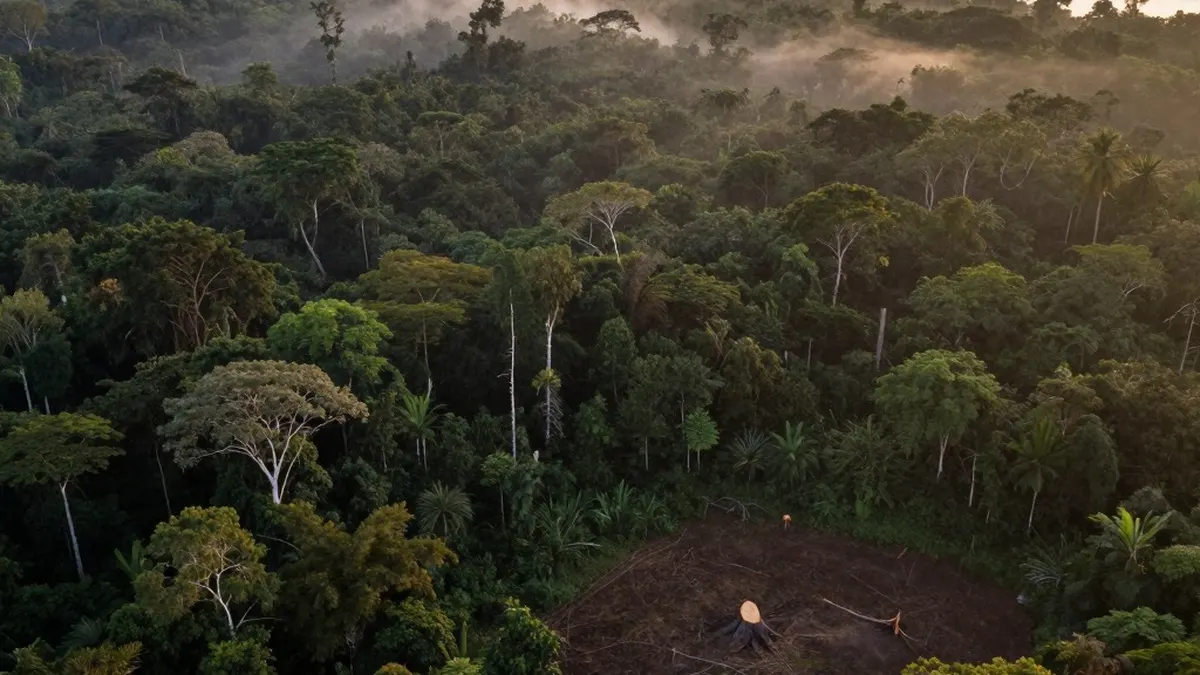
Brazil's President-elect Luiz Inácio Lula da Silva announced on Thursday that Marina Silva, a longtime Amazon activist, will serve as the country's next environment minister. The choice suggests his incoming government intends to make fighting illegal deforestation a priority, even at the risk of clashing with powerful agribusiness interests.
Silva told the news network Globo TV soon after the announcement that the ministry she will lead is to be renamed the Ministry of Environment and Climate Change. Lula also named Sonia Guajajara, an Indigenous woman, as Brazil's first minister of Indigenous peoples, and picked Carlos Fávaro, a soybean producer, to run the agriculture ministry.
Lula and Silva both attended the recent U.N. climate conference in Egypt, where Lula promised cheering crowds "zero deforestation" in the Amazon by 2030. "There will be no climate security if the Amazon isn't protected," he said. Such a goal would mark a complete change of direction from the past four years under outgoing President Jair Bolsonaro.
Silva was born in the Amazon and worked as a rubber tapper as a teenager. During most of Lula's earlier presidency, from 2003 to 2010, she was environment minister, overseeing the creation of dozens of conservation areas and a strategy that combined major operations against environmental criminals with new satellite surveillance. She also helped design the Amazon Fund, the largest international effort to preserve the rainforest, which is mostly backed by Norway. Deforestation fell dramatically during her tenure.
The two later fell out. As Lula courted farmers during his second term, with soy demand from China surging, tensions grew over anti-deforestation measures that figures such as Mato Grosso Gov. Blairo Maggi, one of the world's largest soybean producers, lobbied against. They also disagreed over the Belo Monte Dam, which displaced about 40,000 people and dried up stretches of the Xingu River. Silva resigned in 2008, left the Workers' Party and became a fierce critic of Lula and his successor, Dilma Rousseff. They began to reconcile only during this year's campaign, united in opposing Bolsonaro, and she joined Lula after he embraced her preservation proposals.
Bolsonaro, by contrast, froze the creation of protected areas, weakened environmental agencies and put forest management under the agriculture ministry. His environment minister resigned after national police began investigating whether he had aided the export of illegally cut timber. Amazon deforestation hit a 15-year high in the year ending in July 2021, then slowed somewhat over the following 12 months.
In Egypt, Lula pledged to prosecute all crimes in the forest, from illegal logging to mining, to press wealthy nations to deliver promised climate-adaptation aid to developing countries, and to coordinate with other major tropical forest nations, Congo and Indonesia. Silva would be responsible for carrying out much of that agenda. "Brazil will return to the protagonist role it previously had when it comes to climate, to biodiversity," she said at the summit.
She is likely to meet resistance in Congress, where the farm caucus will make up more than a third of the Lower House and Senate next year. Two Lula-allied lawmakers from the agriculture sector told the Associated Press, on condition of anonymity for fear of reprisals, that they disagreed with her nomination. Others were more optimistic. Neri Geller, an agribusiness caucus lawmaker who served as a bridge to Lula during the campaign, said: "I think she matured and we matured."
Silva may also benefit from a revived Amazon Fund, whose new payments were frozen by Norway and Germany in 2019 after Bolsonaro shut state governments and civil society out of decision-making. The Norwegian Embassy praised Lula's "clear signals" and said the fund could be opened quickly once Brazil reinstates its governing structure. Caetano Scannavino of the Amazon nonprofit Health and Happiness said the challenges are now greater than two decades ago, citing growing criminal activity and agribusiness pressure, and added that "Silva's success is Brazil's success in the world, too."
Source: Los Angeles Times